Can Brown Skin Have Fractional CO₂ Laser?
Why "No" Isn't the Only Answer

Best for:
Info about:
CO2 laser resurfacingOne of the most common things I hear from people with brown skin is:
"I was told I can't have CO₂ laser because my skin is too dark."
As someone with Fitzpatrick Skin Type IV myself, I understand how frustrating that can be.
Many people with brown skin are told they aren't suitable for one of the most effective treatments for acne scars, surgical scars, wrinkles and skin rejuvenation—not because the treatment is impossible, but because some practitioners are understandably cautious about the risk of post-inflammatory hyperpigmentation (PIH).
I want to share my own experience to help people who may have been told that CO₂ laser is simply "not for them".
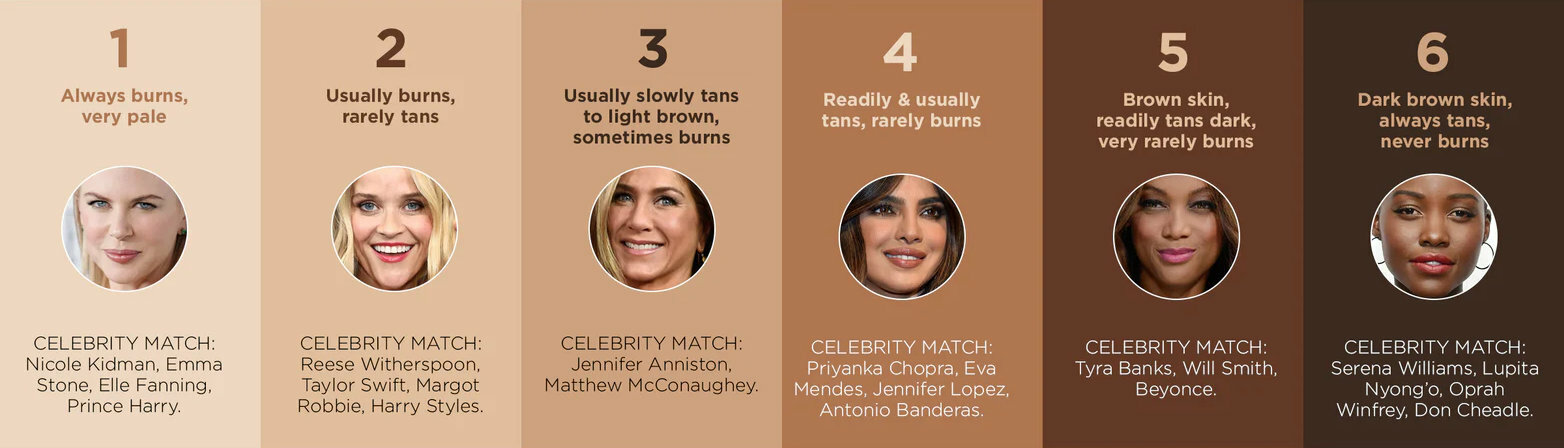
Melasma predominantly affects women with darker skin tones, such as those with Fitzpatrick skin types 3, 4 and 5.
Why My Experience Is Different
Before moving to New Zealand, I trained and practised in the Philippines, where treating Fitzpatrick Skin Types III–V was part of everyday clinical practice. Working with brown skin wasn't the exception—it was the norm.
That experience gave me a deep understanding of how darker skin responds to laser treatments, when to adjust treatment settings, and when someone may not be a suitable candidate. It continues to shape the way I assess and treat clients at MJ Exposé Health & Beauty in Christchurch today.
The Laser Isn't the Whole Story
One of the biggest misconceptions is that the laser machine determines the outcome.
In reality, the person operating the laser is just as important—if not more important—than the device itself.
Many clinics around the world use the same fractional CO₂ laser devices. The difference often lies in:
- The practitioner's experience treating darker skin tones.
- Choosing appropriate treatment settings.
- Careful patient assessment.
- Thorough aftercare guidance.
- Managing any pigmentation concerns early if they occur.
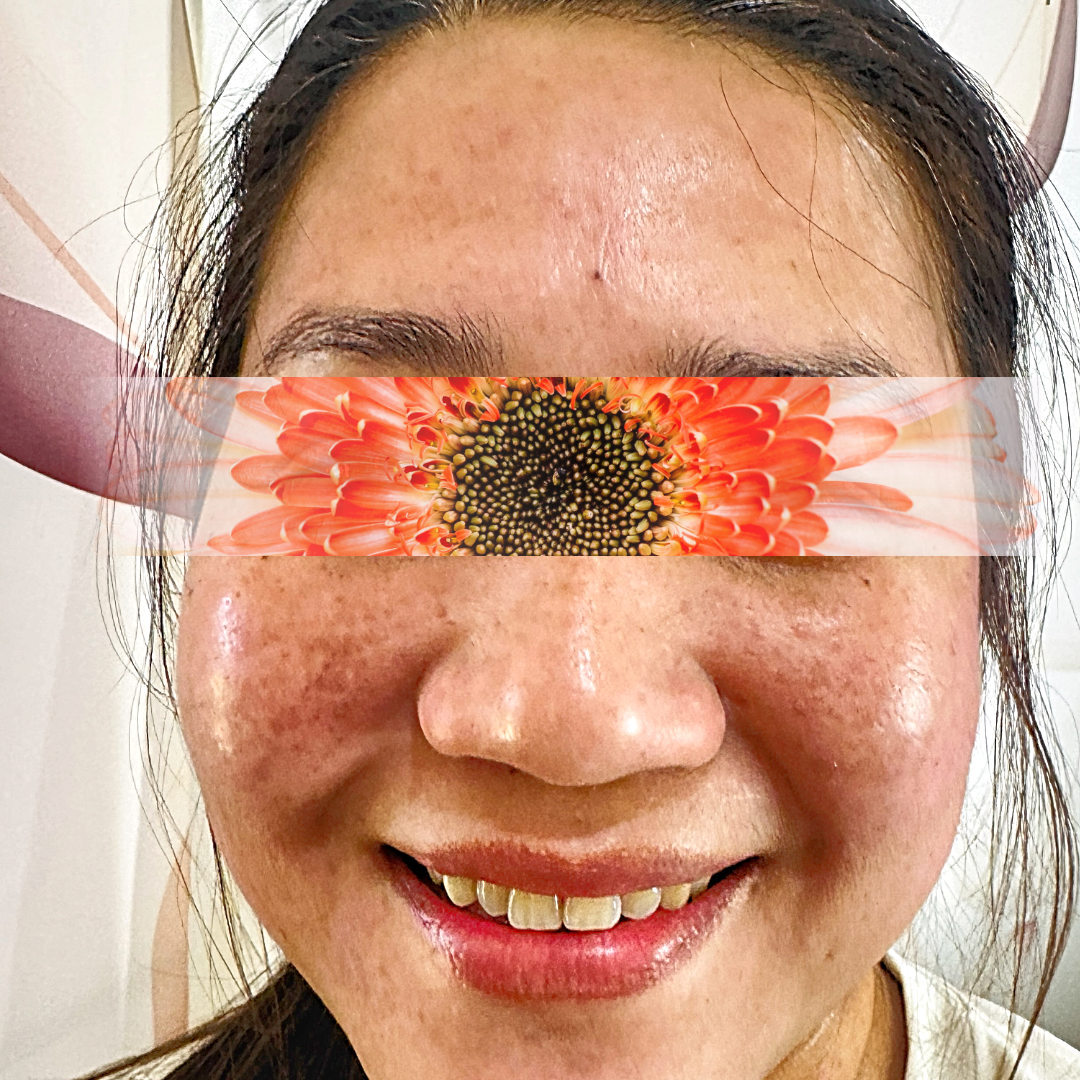
For years, Mrs. K struggled with melasma, enlarged pores, age spots, and uneven skin texture.
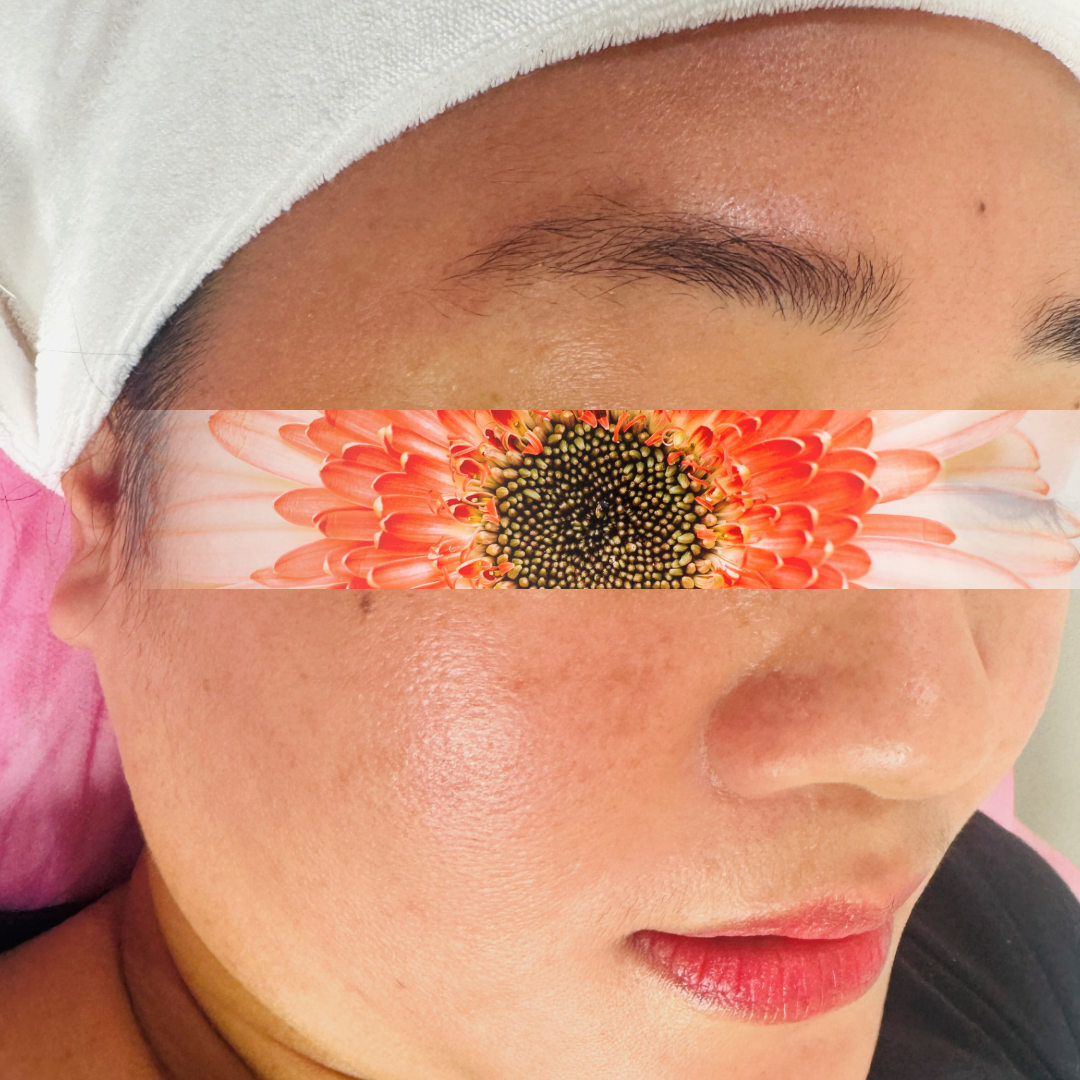
Like many clients, she had already visited multiple clinics and spent thousands trying different treatments — with little to no results.
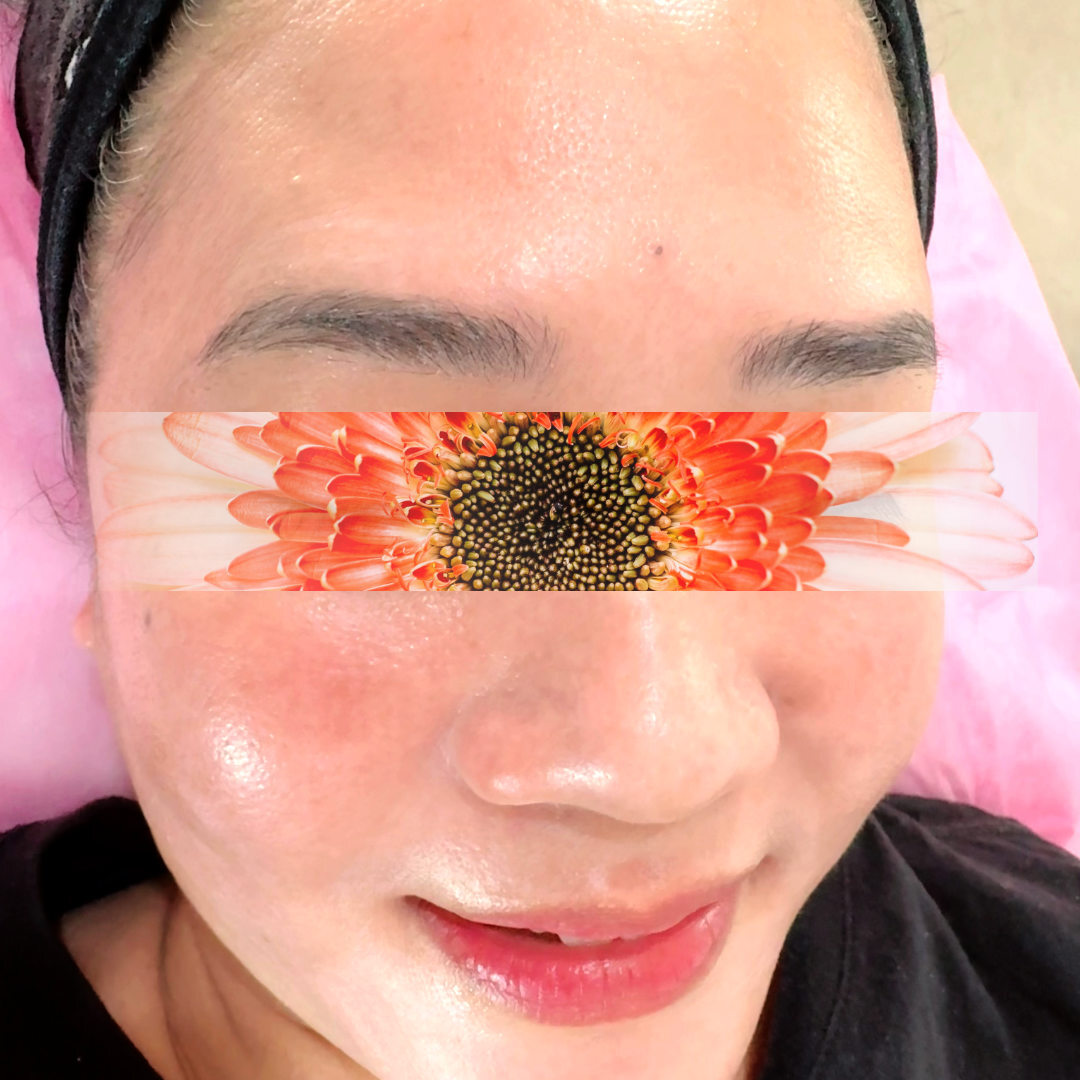
Using medical-grade products, we targeted the melasma. In just 3 weeks she started seeing visible improvement.
Why Is There Such a Difference Between Countries?
In countries such as the Philippines, where most people have Fitzpatrick Skin Types III–V, practitioners perform these treatments on brown skin every day. As a result, they become highly experienced in understanding how darker skin responds to laser treatment.
In New Zealand, many practitioners naturally treat lighter skin types more often. Post-inflammatory hyperpigmentation is a recognised risk in darker skin. Because of this, some clinics choose not to perform the treatment if they do not feel confident treating Fitzpatrick Skin Types IV–VI.
This cautious approach comes from a desire to avoid complications, and I respect that. However, I also believe it is important for clients to know that being declined does not necessarily mean the treatment is unsafe for them.
My Clinical Experience
Throughout my career, I have treated thousands of clients with Fitzpatrick Skin Type IV using fractional CO₂ laser.
In my own clinical practice, I have not encountered a case of clinically significant post-inflammatory hyperpigmentation following fractional CO₂ laser treatment when appropriate patient selection, treatment settings and aftercare protocols were followed.
That does not mean hyperpigmentation is impossible. Medical research shows that it can occur, particularly in darker skin types.
What my experience has shown me is that good training, careful technique and excellent aftercare can make a significant difference in reducing that risk.
Just as importantly, not every client is a suitable candidate. Every consultation includes an assessment of your skin type, concerns, medical history and treatment goals before any recommendation is made.

Mrs H. before her treatment

Mrs H. midway through her treatment

Mrs H. finishing off her treatment
Brown Skin Deserves Experienced Care
If you have been told that your skin is "too dark" for fractional CO₂ laser, ask your practitioner one important question:
"How much experience do you have treating skin like mine?"
Brown skin should not automatically be excluded from advanced treatments. Instead, it should be treated by someone who understands its unique characteristics and has the knowledge and experience to perform the procedure safely.
My Philosophy
As both a practitioner and someone with brown skin myself, I believe everyone deserves access to effective treatments based on individual assessment—not assumptions.
My goal has always been to provide safe, evidence-informed treatments while respecting the unique needs of every skin type.
Brown skin is beautiful.
Brown skin is treatable.
With the right practitioner, careful assessment and appropriate aftercare, many people with Fitzpatrick Skin Type IV can achieve excellent results with fractional CO₂ laser.
What Our Clients Say
Karl W. shares his experience of treatment at MJ Exposé Health & Beauty:
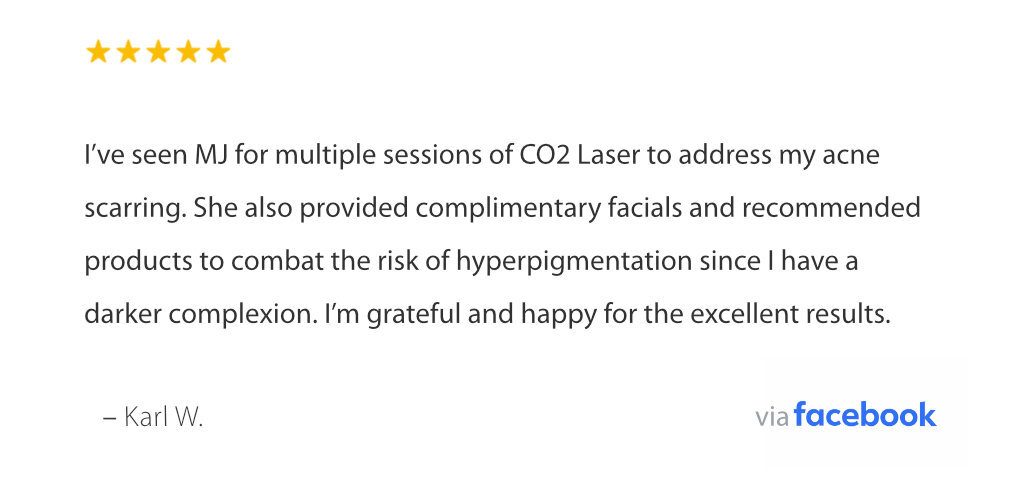
See this, and many more recommendations for MJ Exposé on Facebook
Considering fractional CO₂ laser for brown skin? Book a consultation at MJ Expose Health & Beauty in Christchurch. I personally assess every client to ensure the right treatment plan for your skin type.
Book Your Consultation Book Your Consultation
 AfterPay is avaliable for all purchases.
Can people with brown skin have fractional CO₂ laser?
Yes—many people with Fitzpatrick Skin Types IV–VI can be suitable candidates. The key is careful assessment, appropriate treatment settings and an experienced practitioner.
How do I know if I'm a suitable candidate?
The only way to know is through a professional consultation. Your skin type, medical history, pigmentation concerns and treatment goals all need to be considered before treatment is recommended.
Is there a risk of hyperpigmentation?
Yes. Post-inflammatory hyperpigmentation is a recognised risk in darker skin. However, careful patient selection, appropriate treatment settings and following your aftercare instructions can significantly reduce that risk.
How do I know if my practitioner has experience treating darker skin?
Ask them directly how often they treat Fitzpatrick Skin Types IV–VI and what approach they take to reducing the risk of hyperpigmentation. An experienced practitioner should be happy to answer these questions.
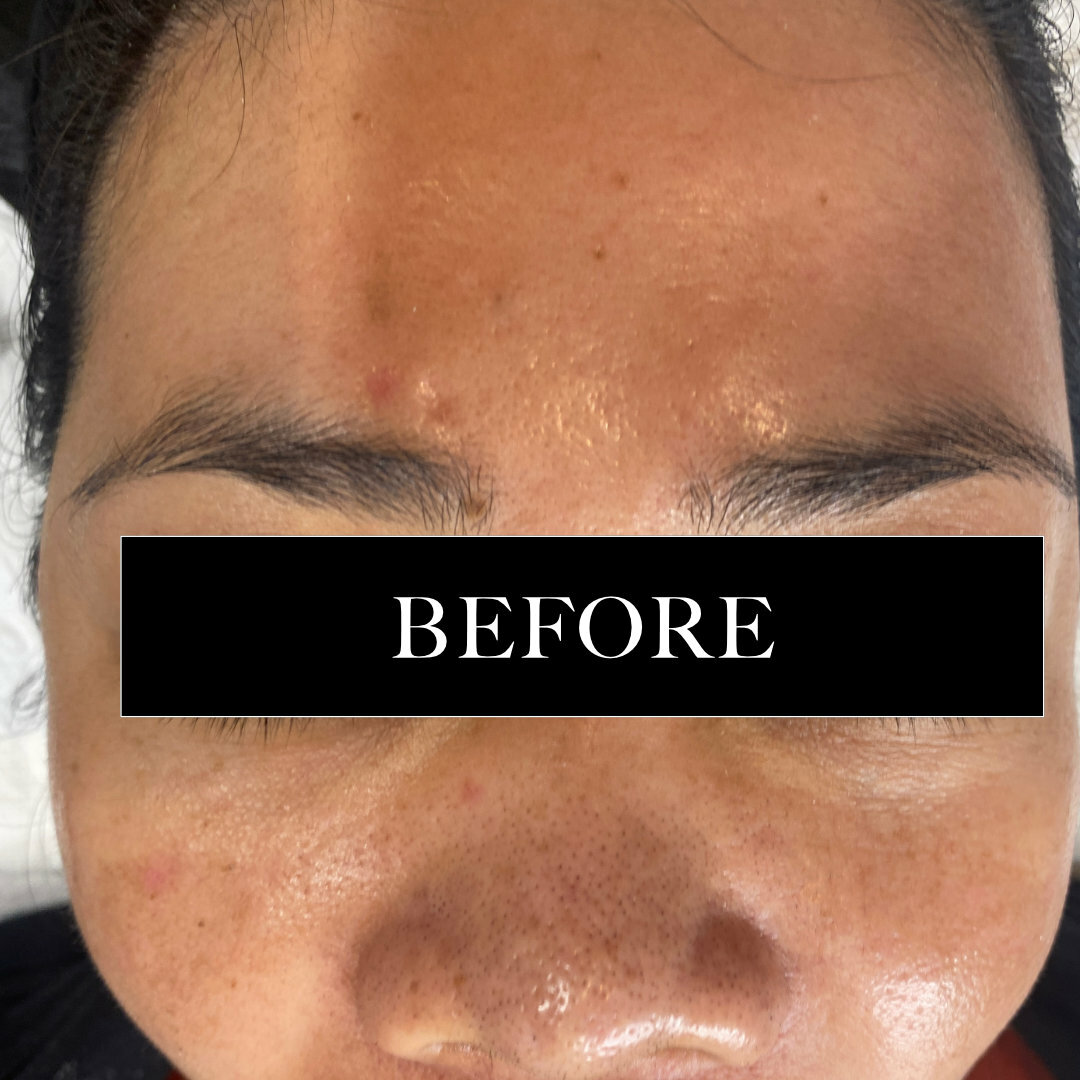
Client A before treatment
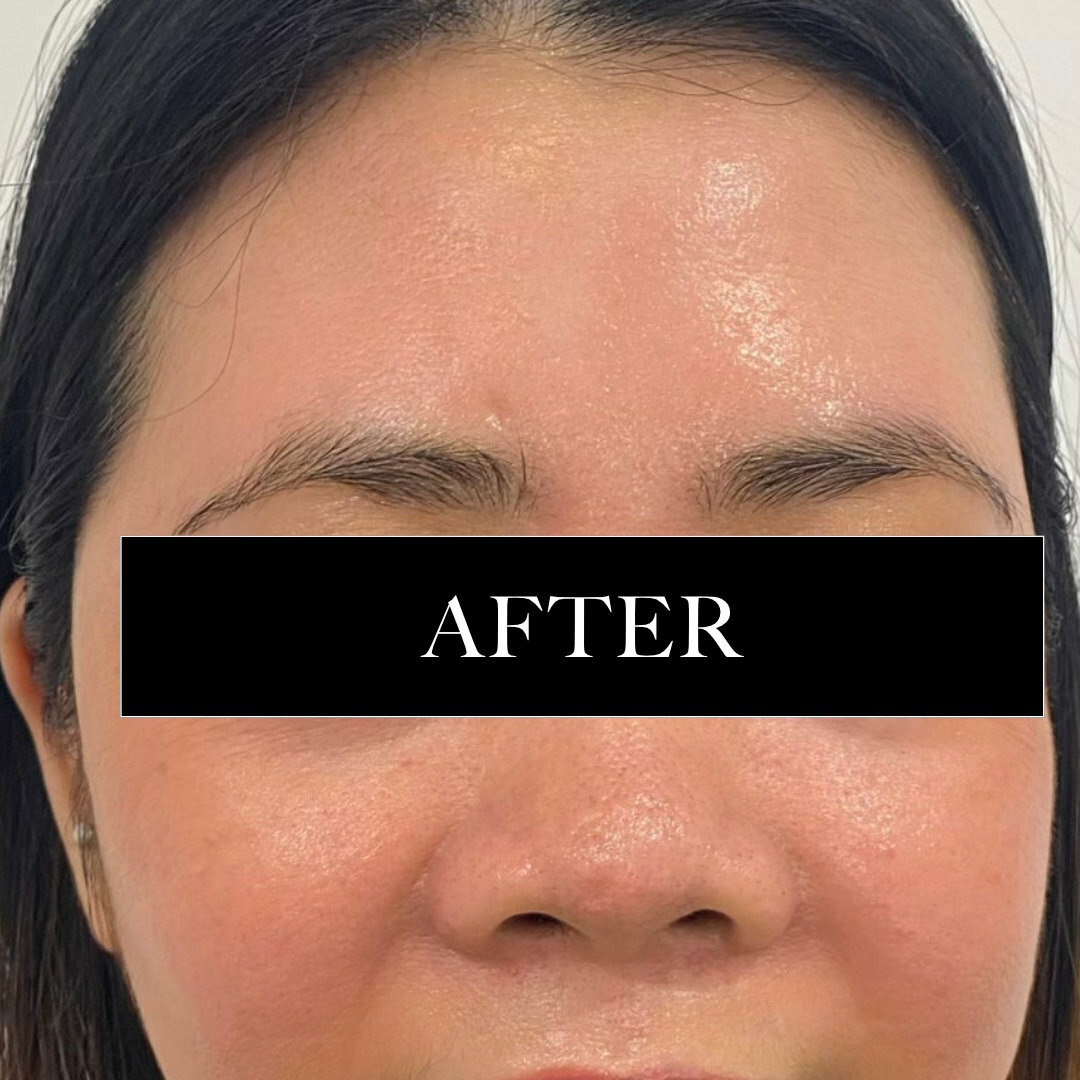
Client A after treatment
Considering Fractional CO₂ Laser for Brown Skin?
If you've previously been told you're not suitable for fractional CO₂ laser because of your skin tone, it may be worth seeking a second opinion.
At MJ Exposé Health & Beauty in Christchurch, every client receives a personalised consultation to determine whether fractional CO₂ laser is the right treatment for their skin type, concerns and goals.
You can also learn more about the treatment itself on our Fractional CO₂ Laser page and read our aftercare guide before your consultation.
MJ Endrina is the founder and head beauty expert at MJ Exposé Health & Beauty, 29 Mariposa Crescent, Aidanfield, Christchurch. She has over 25 years of experience in clinical skin treatments.