Hydrafacial vs Microdermabrasion: Which Treatment Is Right for Your Skin?
Both treatments exfoliate the skin, but they work in different ways. Here’s how to decide which approach may better suit your skin.

Best for:
Hydrafacial vs Microdermabrasion
Hydrafacial or microdermabrasion?
If you are looking for smoother, fresher-looking skin, you may come across both treatments.
At first, they can sound quite similar.
Both exfoliate the skin. Both are non-surgical treatments. And both can leave the skin feeling smoother after treatment.
But the way they work is different.
The right choice depends on your skin, your concerns, and what you want from your appointment.
What Is a Hydrafacial?
Hydrafacial is a multi-step facial treatment.
It combines cleansing, exfoliation, gentle suction, extraction, and hydration using a specialised device.
Targeted serums and boosters can also be added depending on your skin concerns.
Hydrafacial describes its treatment as using gentle suction and specialised tips to remove impurities and dead skin cells while applying hydrating serums.
This makes hydration a major part of the treatment rather than something that is simply added at the end.
What Is Microdermabrasion?
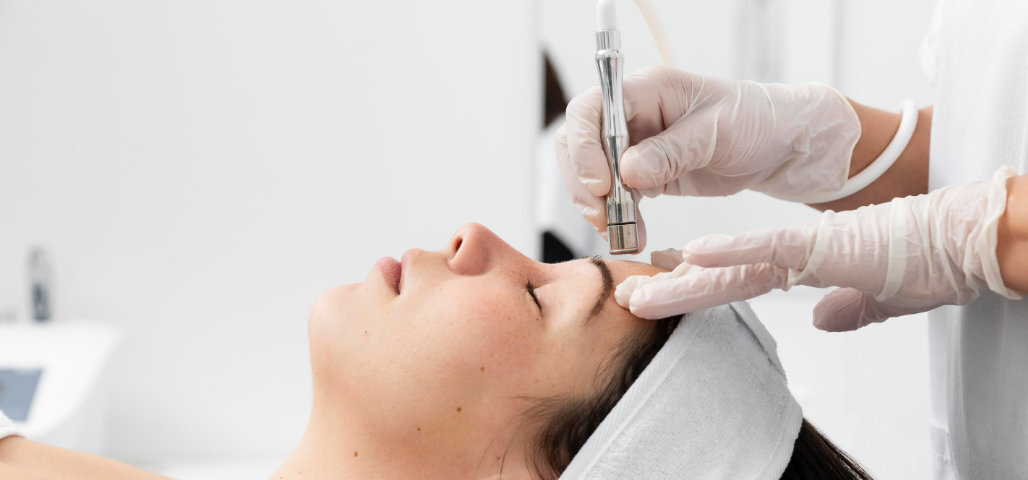
Microdermabrasion focuses mainly on physical exfoliation.
A specialised device gently removes the uppermost layer of dead skin cells.
Depending on the system being used, this may involve fine crystals or a diamond-tipped wand together with suction.
Cleveland Clinic describes microdermabrasion as a minimally invasive treatment that gently exfoliates the uppermost layer of the skin.
The result is a smoother-feeling surface and a fresher appearance.
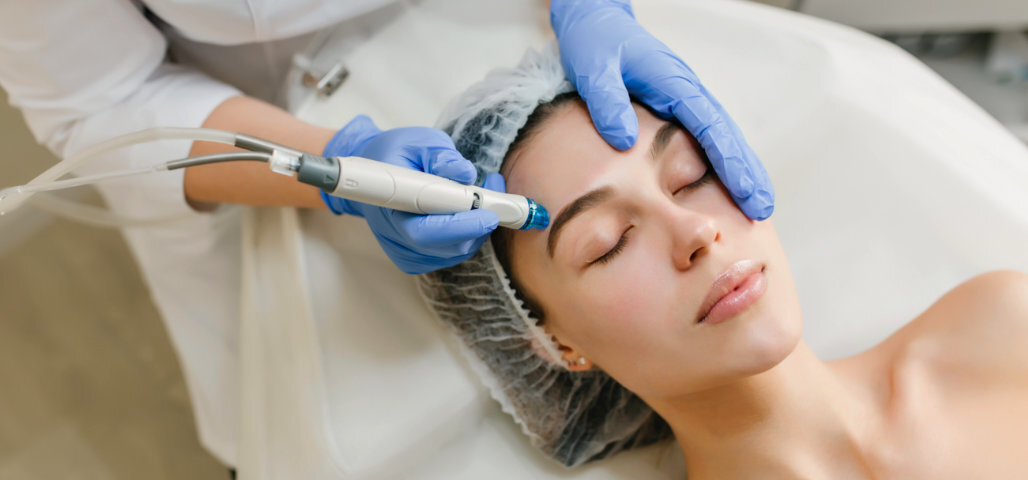
Hydrafacial is a multi-step facial treatment.
What Is the Main Difference?
The simplest difference is this:
Microdermabrasion is mainly an exfoliation treatment. Hydrafacial combines exfoliation with extraction and hydration.
With microdermabrasion, the focus is on physically removing dead surface skin.
With Hydrafacial, exfoliation is only one part of the treatment.
The skin is also cleansed, pores can be gently extracted, and hydrating solutions are applied during the treatment.
That difference can help when deciding which experience you prefer.
Which Treatment Is Better for Dry or Dehydrated Skin?
If hydration is your main concern, Hydrafacial may be the more natural choice.
Hydrating solutions form part of the treatment itself.
This can be useful when skin feels tight, dry, dull, or lacking in moisture.
Microdermabrasion can improve surface texture, but hydration is not its main purpose.
Some people may experience temporary dryness or sensitivity after microdermabrasion.
MJ can assess how dry or sensitive your skin is before recommending either option.
Which Is Better for Congested Pores?
Hydrafacial may appeal to people who are concerned about mild congestion or clogged pores.
The treatment combines exfoliation with gentle suction to help remove debris from the pores.
Microdermabrasion can also improve the appearance of blackheads and enlarged pores by exfoliating surface buildup. Cleveland Clinic lists enlarged pores and blackheads among concerns that microdermabrasion may help make less noticeable.
The better choice depends on how congested your skin is and whether you also want hydration as part of the treatment.

Microdermabrasion focuses mainly on physical exfoliation.
Which Is Better for Dull Skin?
Both treatments can help freshen the look of dull skin.
Microdermabrasion removes surface dead skin cells through physical exfoliation.
Hydrafacial also exfoliates but follows this with extraction and hydration.
If dullness is mainly caused by surface buildup, either treatment may be worth considering.
If your skin also feels dry or dehydrated, Hydrafacial may offer more of what you are looking for in one appointment.
What About Fine Lines?
Both treatments may help improve the overall look and texture of the skin.
Microdermabrasion is often used for superficial cosmetic concerns including fine lines and uneven texture.
Hydrafacial may also help fine lines look softer by improving hydration and smoothing the skin's surface.
Neither treatment should be thought of as a replacement for procedures designed to address deeper wrinkles or volume loss.
MJ can help set realistic expectations based on the type of lines you are concerned about.
Which Treatment Feels Gentler?
This depends on your skin and the strength of the treatment.
Microdermabrasion uses physical abrasion.
People may feel scratching, suction, vibration, or mild stinging while it is being performed. Temporary redness and sensitivity can occur afterward.
Hydrafacial also exfoliates and uses suction, but many people find the combination of fluid, hydration, and suction comfortable.
If you have sensitive skin, do not choose based on which treatment is described as “gentler” online.
Have your skin assessed first.
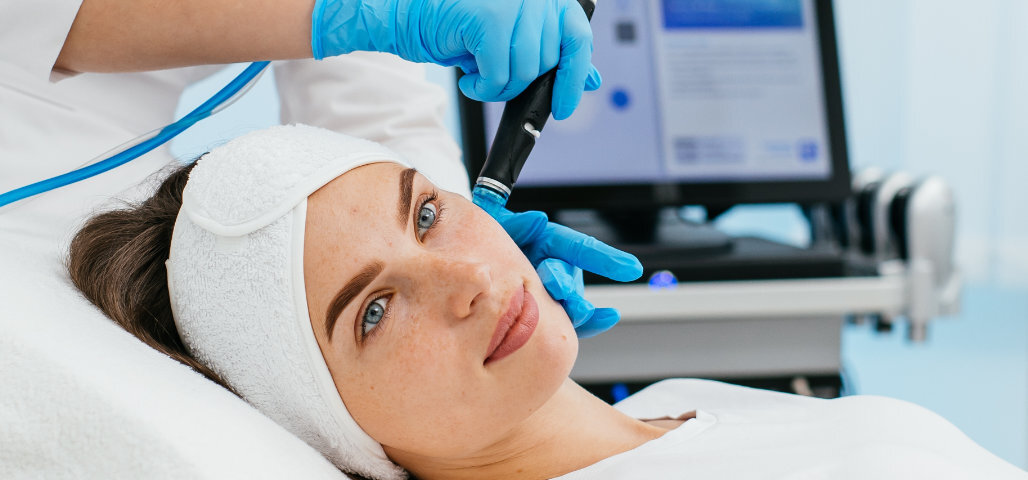
Which Has More Downtime?
Both treatments are generally associated with relatively little recovery time.
Hydrafacial usually allows people to return to their normal routine shortly after treatment, although temporary redness or sensitivity may occur.
Microdermabrasion also has minimal downtime.
Cleveland Clinic notes that skin may be red, swollen, or sensitive for up to around 24 hours after microdermabrasion.
Your own response may be different.
Skin sensitivity, treatment intensity, products used, and your normal skincare routine can all affect how your skin feels afterward.
What If I Have Sensitive Skin?
Sensitive skin needs a more individual approach.
Neither treatment should automatically be considered suitable simply because it is non-surgical.
If your skin is inflamed, sunburnt, damaged, or experiencing an active flare of rosacea, eczema, or dermatitis, treatment may need to wait.
Microdermabrasion may also not be appropriate for some people with active acne, frequent rashes, eczema, or psoriasis.
MJ will look at the condition of your skin before recommending treatment.
What If I Have Acne?
The word “acne” covers many different skin situations.
Someone with a few blocked pores has very different needs from someone with painful or inflamed cystic acne.
Hydrafacial may be useful when mild congestion and clogged pores are the main concern.
Microdermabrasion may also be used for some superficial acne-related concerns, but active acne can affect whether treatment is appropriate.
Neither treatment should replace medical assessment or treatment for persistent or severe acne.
Hydrafacial vs Microdermabrasion at a Glance
Hydrafacial may appeal to you if you want:
- Cleansing and exfoliation in one treatment
- Gentle pore extraction
- A strong focus on hydration
- Customised serums or boosters
- A refreshed look with minimal downtime
Microdermabrasion may appeal to you if you want:
- A treatment focused mainly on physical exfoliation
- Smoother-feeling surface texture
- Help with superficial dullness or roughness
- A straightforward resurfacing treatment
- Minimal downtime
Neither option is automatically better.
The best treatment is the one that matches your skin.
Can You Alternate Between Hydrafacial and Microdermabrasion?
Possibly — but more treatment is not always better.
How often you exfoliate your skin matters.
Having multiple resurfacing treatments too close together may leave some people feeling dry, irritated, or sensitive.
MJ can help you plan your treatments so your skin has enough time to recover between appointments.
Your home skincare should also be taken into account.
Strong retinoids, acids, scrubs, and other exfoliating products can affect how your skin responds.
So, Which One Should You Choose?
Choose based on what you want to improve.
If you want cleansing, extraction, and hydration as well as exfoliation, Hydrafacial may suit you better.
If your main goal is straightforward physical exfoliation and smoothing of the skin's surface, microdermabrasion may be worth considering.
But you do not need to work it out alone.
MJ can look at your skin and recommend the option that makes the most sense for you.
Sometimes that will be Hydrafacial.
Sometimes another treatment may be a better fit.
Not Sure Which Treatment to Book?
Book a consultation with MJ and let your skin decide. She can assess your skin, talk through your concerns, and recommend whether Hydrafacial, microdermabrasion, or another treatment is the better choice for you.
Book Your Skin Consultation Book Your Skin Consultation
 AfterPay is avaliable for all purchases.
Individual results vary. This information is general in nature and does not replace personalised medical or skincare advice.